Friday, about 9:00 AM to 3:00 PM, Jesus hung on a cross
“Now Jesus did many other signs in the presence of the disciples, which are not written in this book; but these are written so that you may believe that Jesus is the Christ, the Son of God and that by believing you may have life in his name.” (Jn.20:30, 31)
Many have taken pen in hand and written about one of the most important days in Christianity. The amount of commentary on the death, burial, and resurrection of Christ could fill rooms. Emphasis is placed on the death of the Savior. The cross’s impact on the lives of Christians today is as far-reaching as the east is from the west. It should not be a surprise; Jesus’ life pointed forward toward His death (Mt.1:21; Lk.1:31; 2:30, 35). He often predicted his death (Mt.16:21; 17:22, 23; Lk.18:31-33). Long before the event took place, Jesus “fixed” his face toward Jerusalem, where he knew he would die by the Roman cross. Friday, between the 3rd and 9th hour, the ministry of our Christ came to a climax on the cross. Six hours at Golgotha, the place of the skull, he died! (Mk.15:25, 33, 34, 37) The gospel of Mark puts it this way, “And Jesus uttered a loud cry and breathed his last.” (vs.37)
He breathed his last! No one that has lost loved ones wants to hear those words. They usher in the reality of finality! Those words signal to all with the illumination of a thousand lighthouses; life is no more! But is it? Before we answer that question, take a journey with me through the agony suffering of Six Hours at Golgotha!
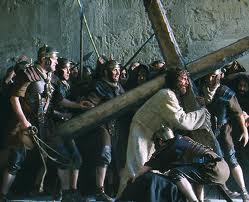
Roman crucifixion was a gruesome form of capital punishment. The victim suffered excruciating pain for hours, even days, before the rigors of the cross finally snuffed out his life. In its most common form, the cross consisted of two pieces of wood. The upright, called the stipes, was permanently fixed in the ground. The crosspiece, called the patibulum, was carried to the site of the execution by the condemned man. This task was in itself an ordeal since the patibulum was a stout beam weighing more than a hundred pounds. The punishment of the Roman cross usually began with physical public flogging (beating) of the sentenced individual. Often, the individual did not have the strength to carry the crosspiece to the place of execution. The Roman Centurion would flog the individual for not completing the task and call one from the crowd to take the crosspiece.
“In the case of Christ, when Pilate released the criminal Barabbas and handed Jesus over to them, it was apparent from scripture that our Lord and Savior were whipped and scourged (Mt.27:26); the Roman guard took Jesus and placed him before the battalion, stripped him put a scarlet robe on him, fashioned a crown of thorns and placed it upon his head (Vs.27-29), the mocked him saying, “Hail, King of the Jews” (vs.29), they spat upon him, hit on the head with a reed, finally stripping him of the robe and putting his own clothes back on him and led him to the cross. Simon of Cyrene was compelled to carry his cross to the place of the skulls (vs.32, 33). Before we even arrive at Golgatha, our Savior was already bearing the weight of our sins. Think about the scourging with me, as it in itself could almost certainly cause death. Peter wrote in his epistle the following from 1Pe.2:24: “He himself bore our sins in his body on the tree that we might die to sin and live to righteousness. By his wounds, you have been healed.” His wounds were every bit as gruesome as the cross.
William D Edwards, Wesley J Gabel, and Floyd E. Hosmer “On the Physical Death of Jesus Christ.”
In 1968, archaeologists discovered the remains of a Jew, who had been crucified during the era of Christ. It was possible from the skeletal evidence to determine precisely how the man had been fastened to the cross. The new information, debunking many old guesses about the method of crucifixion, left no doubt that this form of punishment was hideous and cruelly efficient. A crude iron spike from five to seven inches long had been driven through each wrist. After both feet with heels and toes together had been turned sideways against the cross, a third spike had been driven through a board and then through both heels. When the man hung on his cross, the lower part of his body must have been twisted to one side.
During the crucifixion, the victim was provided with a partial seat, called a sedile, a simple board nailed to the cross. But he could use the sedile only by allowing his torso to slump, with painful results. The weight of his sinking body forced his knees to bend sharply and stretched out his upraised arms to an unnatural extent. Why did the victim die? In the strangely contorted sitting position, he could breathe in, but he could not relax the muscles of the rib cage sufficiently to breathe out. Thus, to exhale, he had to push himself up, using mainly his legs. Intime, overcome by weakness, he could not raise himself for another breath, and he died of suffocation. Some victims fought off death for two or more days; others died sooner. Either way, the agonies of the victim, as he desperately struggled time after time to raise himself and continue breathing, were prolonged and ghastly.
It is improbable, however, that suffocation was the cause of Jesus’ death. The Gospel of Mark (Mark 15:25; 34-37) records that He was nailed to the cross at the third hour in the morning (about nine o’clock) and that He died the same day at the ninth hour in the afternoon (about three o’clock). Although He had suffered scourging, He undoubtedly possessed enough natural vigor to maintain His breathing on the cross for more than six hours. Those crucified by His side were still alive at the end of the day, even though they probably had also been scourged (John 19:31-33). To hasten their deaths so that no executions would progress during the Feast of Unleavened Bread, the soldiers in attendance broke their legs. Once they could no longer push themselves up, they died rapidly. But when the soldiers came to Jesus, they found that He was dead already. He could not have succumbed to suffocation so soon. What then was the cause of His death?
Shortly after He gave up His spirit, a Roman soldier made sure He was dead by dealing Him a wound that would have been fatal had He still been alive. The soldier thrust a spear upward into His side, undoubtedly into His heart cavity. John reports that from the wound emerged a mixture of blood and water (John 19:34). Ordinarily, having no blood pressure, a corpse does not bleed. What then caused the bloody seepage from the wound in Jesus’ side? The most satisfactory explanation is that the fluid came from the punctured heart cavity, its presence there being a clear sign of a ruptured heart caused by heart disease. But it is unlikely that Jesus, a man of youth and good habits, suffered from heart disease.
There is a more likely explanation of Jesus’ broken heart. It is possible that violent contractions induced by severe emotional and physical stress squeezed the blood inside the heart that the internal pressure rose to burst strength. His tremendous agony could have caused Jesus’ broken heart as he bore our sins and felt the abandonment of His Father because of our sins. So, Jesus died a physical death from a ruptured heart and the trauma of the Roman Crucifixion! Indeed, the cross played its part, but only after his body could no longer function without supernatural help. In the gospel of John chapter 10 verses 17-18, you have this:
“For this reason, the Father loves me because I lay down my life that I may take it up again. No one takes it from me, but I lay it down of my own accord. I have the authority to lay it down, and I have the authority to take it up again. This charge I have received from my Father.”
In other words, He could live or die as He willed. Even when His body reached a condition that would have been fatal to other men, He had the power to go on living.
The Gospel accounts show that He died only when He chose to die. His next to the last saying was, “Father, into thy hands I commend my spirit” (Luke 23:46). Matthew declares that His death came when He “yielded up the ghost!” (Matt. 27:50) It was impossible that God Incarnate should die apart from His consent. Yet when His body could no longer function, He did not cling to life. Instead, He willingly commended His spirit to the Father and breathed no more (Luke 23:46).
The cause of death for Lord and Savior was because he willingly chose it for you and me! Yes, the crucifixion was horrible; yes, there was pain, there was suffering, and the feeling of abandonment (Mt.27:46). But, it was the Son of God, becoming flesh, living life as a physical man, enduring the pain and suffering that man does in every way, willingly die on the cross. Jesus, my Savior, yours too, Breathed His Last! What will you do? How will you respond? Will you follow Him, or will you deny Him? Jesus did not remain in that earthly grave; He rose from the grave and sat triumphantly at the side of our Creator and Father of us all. One day he will return to claim his own. I choose to be his, what about you? Eternity is inevitable; you can spend eternity in the heavenly palaces or the lake of fire! The choice is yours. I encourage you, I beg you, choose Jesus!
 Heart and Mind