FROM THE CHOIRMASTER:
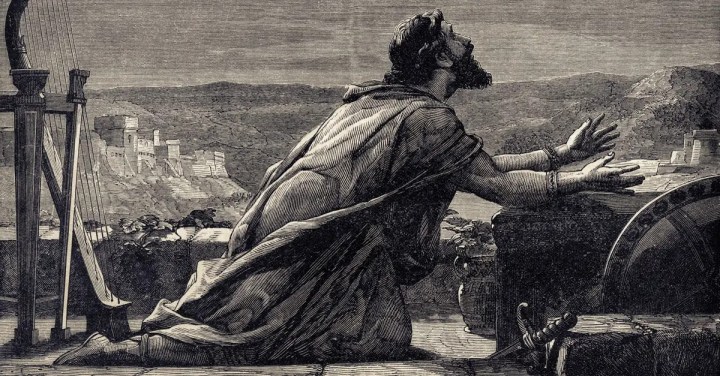
My God, my God, why hast thou forsaken me? Why art thou so far from helping me, and from the words of my groaning? (Psalm 22:1)
TO THE CROSS:
And about the ninth hour Jesus cried with a loud voice, saying, Eli, Eli, lama sabachthani? that is, My God, my God, why hast thou forsaken me? (Matthew 27:46)
Both are questions of deliverance. David has his enemies pursue him and Christ as he hung on the cross for sins He did not commit.
Have you ever questioned God? Have you ever fallen to your knees in great despair and asked the Almighty, “Why Me?” Throughout the bible, you see men asking questions. There is Moses in Exodus the fifth chapter asking God a twofold question of “why.” (Ex.5:22) Job raises several questions before God regarding the “why” of things (Job 3:11, 12; 7:20, 21; 19:22; 21:4). These are just a few. Jeremiah, the weeping prophet, questions our Great Creator often in the inspired books he authored. (Jeremiah & Lamentations) more on the latter book later. The point is; it’s not uncommon for humankind to question God. We even take it to the extreme and blame and curse God. I have never verbally cursed God; I have questioned God at times in my life. From the desperate plea of “why me” to the humility-filled inquiry of “why am I deserving.”
There are times I am at “mental” odds with our faithful Father. It is the “perfect-imperfect-made perfect” relationship. Perfect from God to us – imperfect from us to God – made perfect at the cross.
I fail in times of pain and trouble to remember that Jesus, to present me clean, white as snow, had to go to the cross. In Jesus’ weakest human moment, He asked for this horrible, painful, humiliating death to be removed from Him. It was in the garden when our savior, in great sorrow, pleaded that “if it is possible, let this cup pass away from me:…” However, in the most incredible moment, the divine son of God humbled himself to endure the humility of the Roman cross by simply saying, “nevertheless, not as I will, but as thou wilt.” (Mt.26-38, 39)
It reminds me just how faithful our Father in heaven is. Jeremiah came to this understanding after prophecies to Judah fell on deaf ears for forty years. He is brought to this understanding: to the pinnacle of realization that God is loving, God is kind, God is merciful, Great is HIS faithfulness:
Through the LORD’s mercies, we are not consumed, Because His compassions fail not. They are new every morning; Great is Your faithfulness. “The LORD is my portion,” says my soul, “Therefore I hope in Him!” (Lam.3:22-24)
I try to remind myself daily that God is great in His faithfulness to me. Like Jeremiah, I should rejoice in God’s faithfulness. God is always readily available when His obedient offspring (I.e., John 14:15-21) call upon Him. Jeremiah then utters perhaps the most vivid image we can see: “Jehovah is my portion, saith my soul.” Jeremiah’s strength and confidence in this statement burst forth and bring me to the mountain top of hope, a hope that has its roots firmly planted in God!
I am blessed, so incredibly fortunate!
 Heart and Mind